
Florida, private property
Dead Skunk Removal
Florida has two skunks, the striped skunk and the smaller eastern spotted skunk, and FWC says neither lives in the Keys. Both turn up in residential areas, where they den under sheds and similar structures. A skunk that dies there leaves musk as well as a carcass, and the musk is usually what the household notices first.
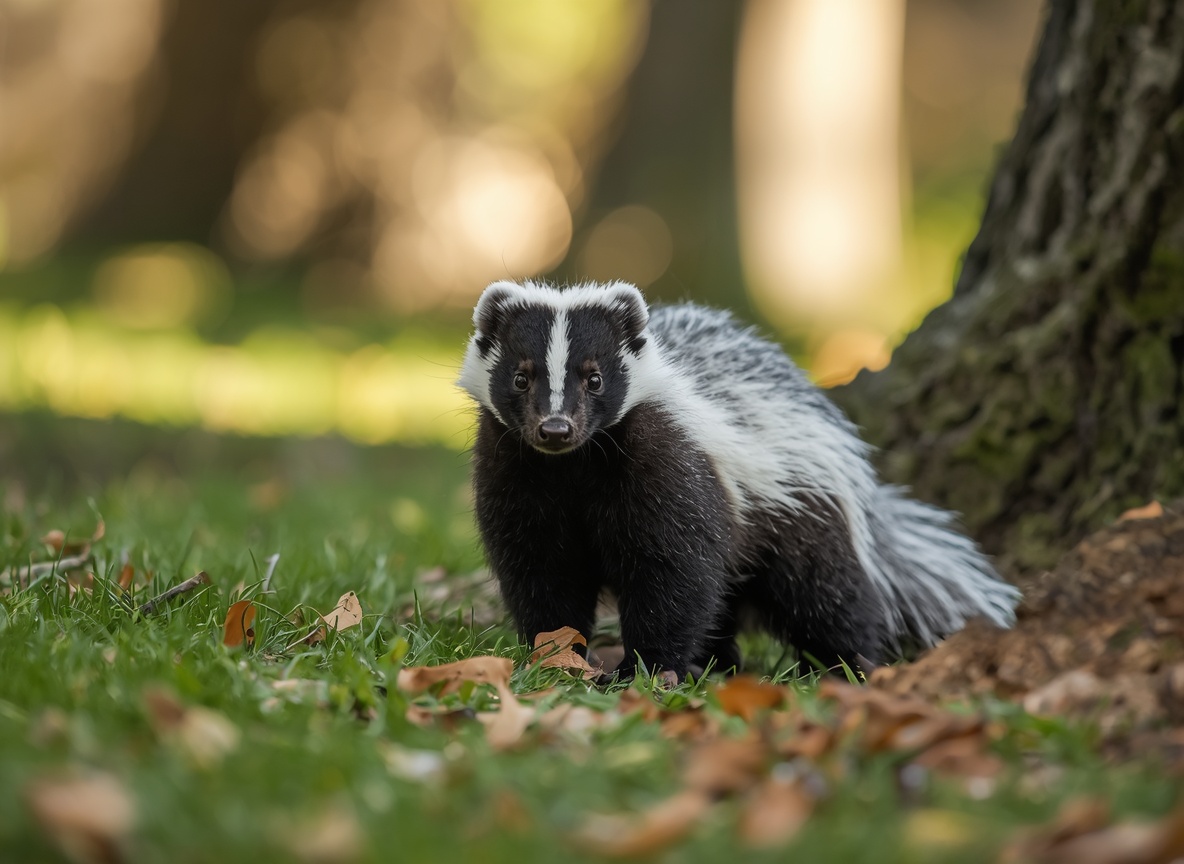
Before you pay anyone. Make sure it is dead before anyone gets close. FWC says a skunk can aim its spray at targets up to 15 feet away, and a sick one can lie still. Then check for contact. A person or pet that was bitten, scratched or mouthed it means a call to your county health department before anything else.
What this covers
- A skunk dead under a shed, a raised deck or porch steps
- One lying on the lawn, in a planting bed or along a fence
- A skunk that got into a crawl space through a vent or gap
- One inside a garage or a screened pool enclosure
- The soil or slab under the carcass, which holds the musk
Where the limit is
A skunk on a public road goes to the road owner. One inside a finished wall, with no route from above or below, gets written advice in the article on a smell coming from a wall and no visit. A skunk down a gopher tortoise burrow stays put unless FWC's permit rules allow digging, and nobody can promise a date by which the musk is gone.
FWC lists brush piles, wood piles, tall grass and empty mammal or gopher tortoise burrows among the places Florida skunks den. If the smell is coming from under a shed that sits flat on the ground, say so, because reaching the skunk may mean shifting the shed, and that decision is yours.
How a call goes
- Tell us whether it is certainly dead, whether a person or pet went near it, where it lies, and the address, which decides whether an operator covers it.
- Any contact means the county health department first, and we give you that route before removal comes up.
- If it looks like a spotted skunk, with broken white stripes and a white triangle on the forehead, you hear about FWC's request before it goes in a bag.
- If an operator can come, they quote the job, remove the skunk, and deal with the ground or surface where the musk has soaked in.
Questions about this animal
How do I tell a spotted skunk from a striped one?
FWC describes the striped skunk as the larger of the two, about 31.5 inches with the tail, usually with two broad white stripes down the back. The eastern spotted skunk runs 21 to 24 inches and has broken white stripes, a white downward triangle on the forehead, and a white tip to its bushy black tail.
Why would FWC want a dead skunk?
The eastern spotted skunk is a Species of Greatest Conservation Need in Florida. FWC biologists have finished collecting data for the Skunk Observation Project but still want spotted skunk carcasses for future genetic analysis. If you find one, email skunks@myfwc.com with the date and the location, and hold off throwing it away until you have.
Is a dead skunk a rabies risk?
The Department of Health in Highlands County lists skunks, with bobcats and otters, among the animals found rabid in Florida; raccoons, bats and foxes are reported most often. If a person or pet was bitten, scratched or had contact with it, the Department's advice is to call your doctor or vet and the county health department right away.
Will the smell go once the skunk is gone?
Taking away the carcass and the soil under it removes the main source. Musk that has soaked into wood, fabric or a dog's coat can linger after that, and no one can tell you in advance for how long.
It is under my shed. Does the shed have to move?
Often not. A gap under a skid, a loose floorboard or a section of lattice is usually enough to get a grabber or hook to it. If lifting or sliding the shed is the only way, the operator should ask you first, and you can say no.
What if the smell is coming from a burrow in the yard?
Find out whose burrow it is before anyone digs. Skunks use empty gopher tortoise burrows, and FWC says gopher tortoises and their burrows are protected by state law, with a permit required before a potentially occupied burrow is disturbed. FWC's burrow identification guide shows how to tell.
Not sure this is the right page? Who removes a dead animal in Florida works through the public and private split, and the county pages give the published position where you live.